

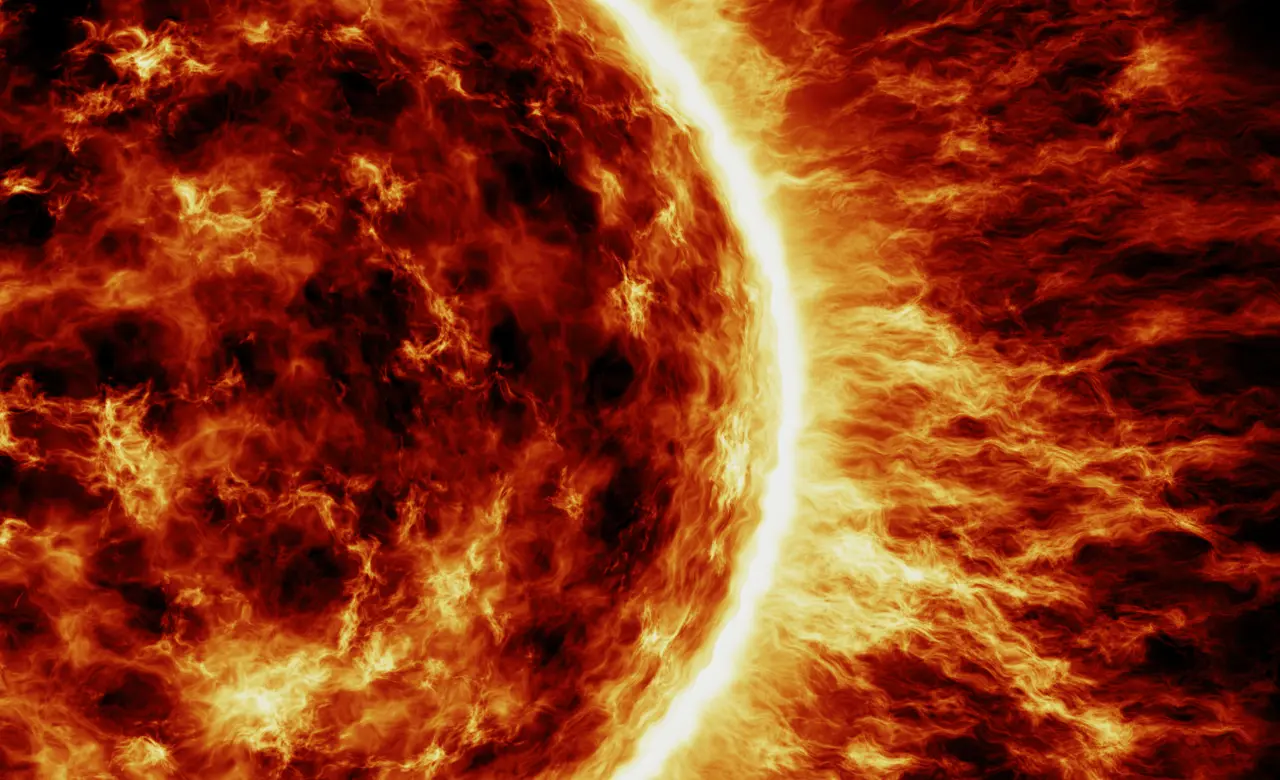
The Sun has been extremely active this week, releasing multiple powerful solar flares that have caught the attention of scientists worldwide. These massive bursts of energy are creating beautiful light shows in the sky while also raising questions about potential impacts on Earth.
NASA’s Solar Dynamics Observatory has captured several strong solar flares over the past few days. The activity started on February 1st with an X1.0 flare. This was followed by an even stronger X8.1 flare later that day. Two more flares occurred on February 2nd, classified as X2.8 and X1.6. The Sun released yet another X1.5 flare on February 3rd and an X4.2 flare on February 4th.
To put this in simple terms, X-class flares are the most intense type the Sun can produce. The X8.1 flare was particularly powerful, marking the strongest solar event since October 2024. In fact, it ranks as the 19th strongest flare ever recorded by scientists.
All these flares came from a single sunspot region called AR4366. This area has grown to nearly 10 times the width of Earth. The sunspot has become magnetically unstable, which makes it easy for powerful flares to erupt. Scientists have counted 26 flares from this region in just one 24-hour period.
What makes solar flares happen? In simple language, they are huge explosions of electromagnetic energy from the Sun. These eruptions occur in active regions where magnetic fields are very strong. The process is not easy to control because it involves complex magnetic forces.
The effects on Earth can be significant. Solar flares travel at the speed of light and reach our planet very quickly. They can cause problems with radio communications, GPS navigation systems, and power grids. Some flares have caused radio blackouts across parts of Earth’s sunlit side. Satellite operators and astronauts in space also need to be careful during these events.
However, there is good news too. These solar flares create stunning aurora displays, also known as northern lights. When particles from the Sun hit Earth’s atmosphere, they cause gases to glow with beautiful colors. Normally, auroras are only visible near the North and South Poles. But during strong solar activity, they can be seen much farther south.
People in Scotland, northern England, and parts of Canada and the United States have had easy opportunities to see these light shows this week. The displays have been particularly impressive during the evenings of February 4th, 5th, and 6th.
The Sun is currently near the peak of its 11-year activity cycle, called Solar Cycle 25. This simple pattern means we can expect more solar flares and aurora displays in the coming months. The peak actually occurred in October 2024, but high activity continues through 2026.
Space weather forecasters are monitoring the situation closely. They expect more flares from sunspot region AR4366 as it continues facing Earth. There is a 75% chance of more moderate flares and a 25% chance of another extremely powerful X-class flare in the next 24 to 48 hours.
A coronal mass ejection, which is a large cloud of solar material, may also be heading toward Earth. This could cause minor geomagnetic storms when it arrives. The impact is expected to be a glancing blow rather than a direct hit, making the effects relatively easy to manage.
Should people be concerned? The simple answer is no, not really. While solar flares can disrupt technology, scientists monitor them constantly and provide warnings when needed. The impacts are usually temporary and manageable. For most people, the main effect will be the chance to see beautiful auroras lighting up the night sky.
NASA and NOAA continue watching the Sun around the clock to keep everyone informed about space weather conditions.