
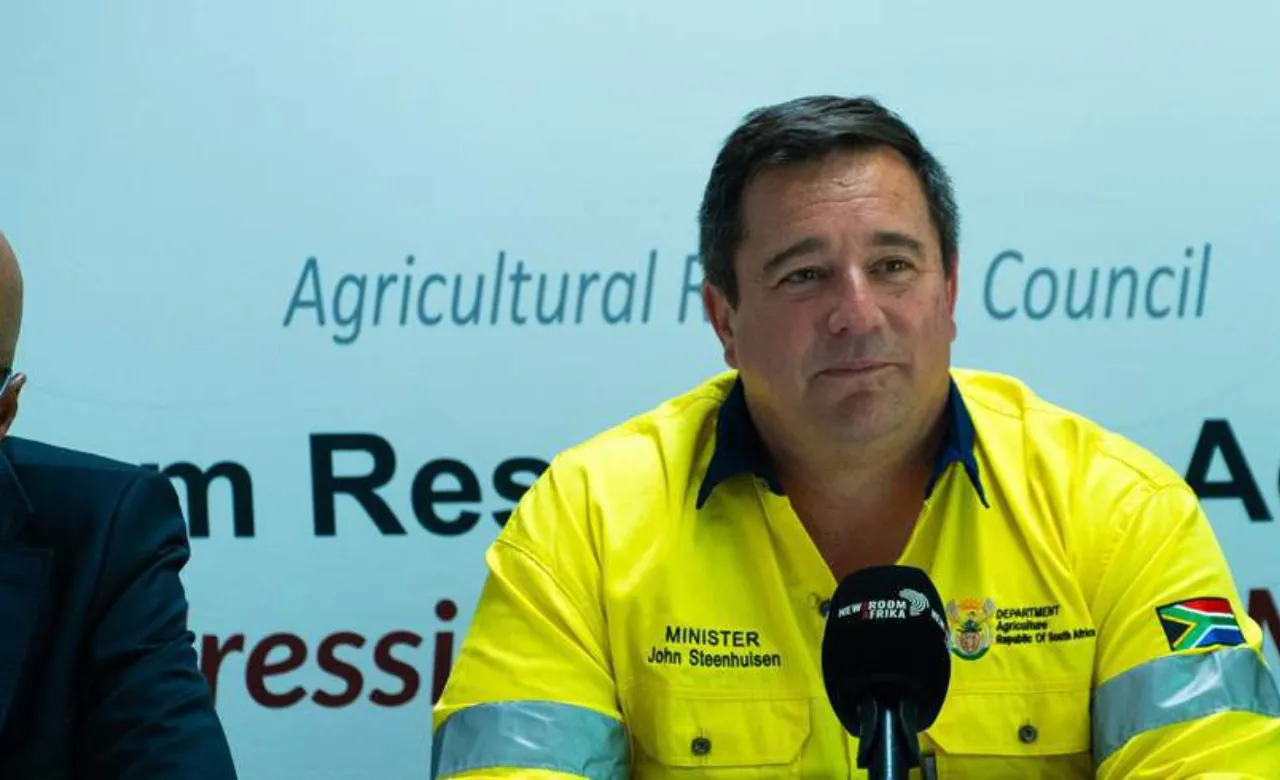
South Africa’s Agriculture Minister John Steenhuisen has said sorry to farmers across the country. He apologized for the pain they have suffered during the foot-and-mouth disease outbreak. This disease has become the worst crisis the farming industry has ever seen. The minister promised to bring urgent reforms to end this problem.
Foot-and-mouth disease is a serious illness that affects animals like cattle, sheep, and pigs. When animals get this disease, they become lame and cannot produce milk or meat properly. This means farmers lose money and their businesses suffer badly. The disease has been spreading across South Africa at a very fast rate. Many farmers have watched their animals get sick while waiting for help from the government.
The minister expressed deep regret during his recent statements. He said he understands how much stress and financial loss farmers have faced. Many farming families have been struggling to keep their businesses alive. Some farmers reported that they could have controlled the outbreak if vaccines had been supplied to their communities on time. Without proper vaccines, the disease just kept spreading from one farm to another.
Steenhuisen acknowledged that he inherited a department with big problems. These challenges have been building up for more than 30 years. The vaccine production facility at Onderstepoort had collapsed due to years of poor management. This made it hard to get enough vaccines when the crisis hit. The minister said he is determined to deal with this situation in a decisive and permanent way.
The government has now started producing its own vaccine. Over two million animals have already received vaccinations. A new single-dose vaccine is planned for distribution in February. This makes it easy for farmers to protect their animals with just one shot instead of multiple doses. The simple process should help vaccinate more animals quickly.
However, many farmers remain frustrated. Some agricultural groups wanted to buy and give vaccines privately to their animals. They felt this would be an easy solution to save their livestock faster. But current government policy says only state entities can procure and administer vaccines. This has led to tension between farmers and the department.
The minister argued that foot-and-mouth disease must be controlled by the state. He said this is required by law under the Animal Diseases Act. For South Africa to regain its disease-free status with international organizations, the country must show it has strict centralized control. Without this, South Africa could lose the ability to export meat and dairy products to other countries.
Some farming groups threatened to take legal action. They wanted the courts to allow private vaccination. Steenhuisen responded by saying such court cases could derail the vaccine rollout. He explained that answering legal challenges would take away resources from the frontline fight against the disease. Money that could buy vaccines would have to be spent on lawyers instead.
To address the crisis properly, the minister established a Biosecurity Council. This body will work to get disease control back on track. The government has also fast-tracked emergency approval to import vaccines from Turkey and Argentina. This ensures South Africa is not dependent on a single source for vaccines anymore.
The minister has committed to focusing all his energy on defeating this outbreak. He wants to make sure this is the last major foot-and-mouth disease crisis South Africa ever experiences. The government has launched a strategy involving mass vaccinations and digital tracking of livestock. This should help monitor animals and prevent future outbreaks.
Provincial veterinary services are doing their best despite being understaffed and under-resourced. They continue to help farmers within their capabilities. The crisis has shown that the agricultural sector needs better preparation and faster response systems for disease outbreaks.
Farmers hope the promised reforms will bring real change. The success of these measures will determine whether South Africa can protect its farming industry and restore confidence among those who produce the nation’s food.