

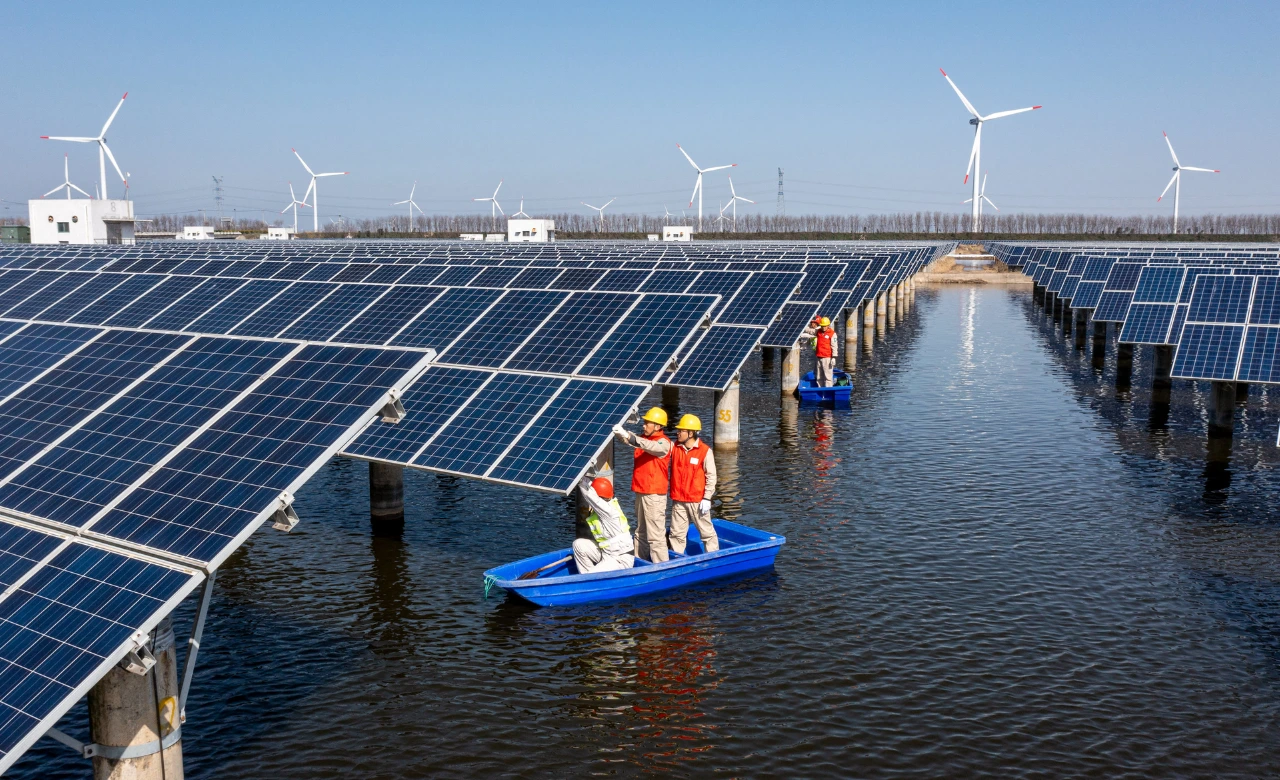
China’s solar energy industry is heading toward a significant slowdown in 2026. The country that leads the world in solar power installations is now expecting a massive drop in new projects. This news has shocked many people who follow clean energy developments around the globe.
The China Photovoltaic Industry Association shared important numbers at their annual conference in Beijing. They expect the country to add between 180 gigawatts and 240 gigawatts of solar power this year. This sounds like a big number, but it’s actually much smaller than what happened last year. In 2025, China installed a record-breaking 315 gigawatts of solar panels. The difference is huge and easy to see when you compare the two years.
So what caused this sudden change? The main reason is a policy shift that happened in 2025. The Chinese government changed how solar projects get paid for their electricity. Before May 2025, solar power companies received guaranteed money for the energy they produced. This made it easy for developers to plan their projects and know they would make a profit. The government ended these guaranteed payments and introduced a new system based on competitive bidding. This means companies now have to compete with each other for contracts, and there’s no promise of fixed returns.
This policy change created an interesting situation. Many solar developers rushed to finish their projects before the new rules kicked in. In May 2025 alone, China added an incredible 92 gigawatts of solar capacity. Companies wanted to lock in the old, more favorable payment terms before they disappeared. After June when the new pricing rules took full effect, installations dropped sharply. By September, monthly additions fell to just 9.66 gigawatts, compared to over 20 gigawatts in September 2024.
The impact of China’s slowdown goes far beyond its own borders. China accounts for more than half of all solar installations worldwide. When China slows down, the entire global solar market feels the effects. Energy experts predict this will be the first time in nearly two decades that global solar installations actually decrease from one year to the next. This is a simple fact that shows just how important China is to the solar industry.
BloombergNEF, a respected research firm, projects that global solar installations will reach 649 gigawatts in 2026. That’s down from 655 gigawatts in 2025. The drop might seem small at less than one percent, but it marks a historic turning point. The solar industry has grown every single year since the early 2000s. Breaking this streak shows that the industry is entering a new phase.
However, it’s not all bad news. Other parts of the world continue to grow their solar capacity. Countries in India, Africa, Southeast Asia, and Latin America are increasing their solar installations. These emerging markets are trying to fill some of the gap left by China’s reduction. Outside of China, solar installations are expected to rise from 283 gigawatts in 2025 to 308 gigawatts in 2026. This growth helps offset China’s decline, though not completely.
The Chinese solar manufacturing industry is also facing challenges. The country has built enormous production capacity for solar panels, reaching 1.8 terawatts in 2025. This is far more than what the world currently needs. Too much manufacturing capacity has led to very low prices for solar panels. While cheap panels are good for people buying solar systems, they create problems for the companies making them. Many Chinese solar manufacturers reported huge financial losses in 2025 because prices dropped so low.
The Chinese government recognizes these problems and is taking action. The Ministry of Industry and Information Technology announced restrictions on building new solar manufacturing facilities in areas that already have too much production capacity. This move aims to prevent the situation from getting worse. The government wants to shift the industry from focusing purely on growth to emphasizing efficiency and profitability instead.
Industry experts believe China’s solar market will eventually stabilize and start growing again. The predictions suggest a rebound could begin in 2027, with global installations reaching 688 gigawatts that year. By 2028, the number might climb to 743 gigawatts. Despite the temporary slowdown, solar power remains central to China’s energy plans. The country is committed to increasing renewable energy as part of its climate goals.
Wang Bohua, chairman of the China Photovoltaic Industry Association, emphasized that this adjustment period is necessary for healthy long-term development. The industry grew so fast in recent years that it created imbalances. Now companies must adapt to a more market-driven environment without relying on government guarantees.
For ordinary people, what does this mean? Solar panel prices might stop falling as quickly as they have been. The extreme competition that drove prices down is likely to ease somewhat. For those planning to install solar panels, prices should remain relatively affordable compared to a few years ago. The technology has already become much cheaper and more efficient than it was a decade ago.
The situation also highlights an important lesson about clean energy transitions. Even positive developments like solar growth can face setbacks when policies change rapidly. Governments need to carefully balance supporting new technologies with creating sustainable market conditions. The Chinese experience shows how hard it can be to manage a fast-growing industry.
Looking ahead, the global solar industry faces a period of adjustment. While growth might slow in 2026, the overall trajectory remains positive. Solar power is still becoming a larger part of the world’s energy mix. The temporary pause in China gives other countries a chance to catch up and develop their own solar industries. This could actually help make the global solar market more balanced and less dependent on any single country.
Climate scientists point out that despite the slowdown, solar installations worldwide are still happening at levels that would have seemed impossible just ten years ago. The industry has come a long way in a short time. Even with China pulling back somewhat, hundreds of gigawatts of new solar capacity will still be added globally in 2026. That’s a massive amount of clean energy coming online to replace fossil fuels.
The next few years will test whether solar power can maintain its momentum in a more competitive, less subsidized environment. Many industry watchers believe the technology has matured enough to succeed even without heavy government support. Solar panels have become so efficient and affordable that they make economic sense in many situations without subsidies. This is exactly what supporters of renewable energy hoped would happen.
China’s solar slowdown is certainly significant news. It affects manufacturers, investors, climate goals, and energy markets worldwide. But it’s important to remember this is likely a temporary adjustment rather than a permanent decline. The shift toward clean energy continues, even if the pace changes from year to year. Solar power has proven itself as a reliable, increasingly affordable source of electricity. That fundamental reality hasn’t changed, regardless of what happens in China this year.