

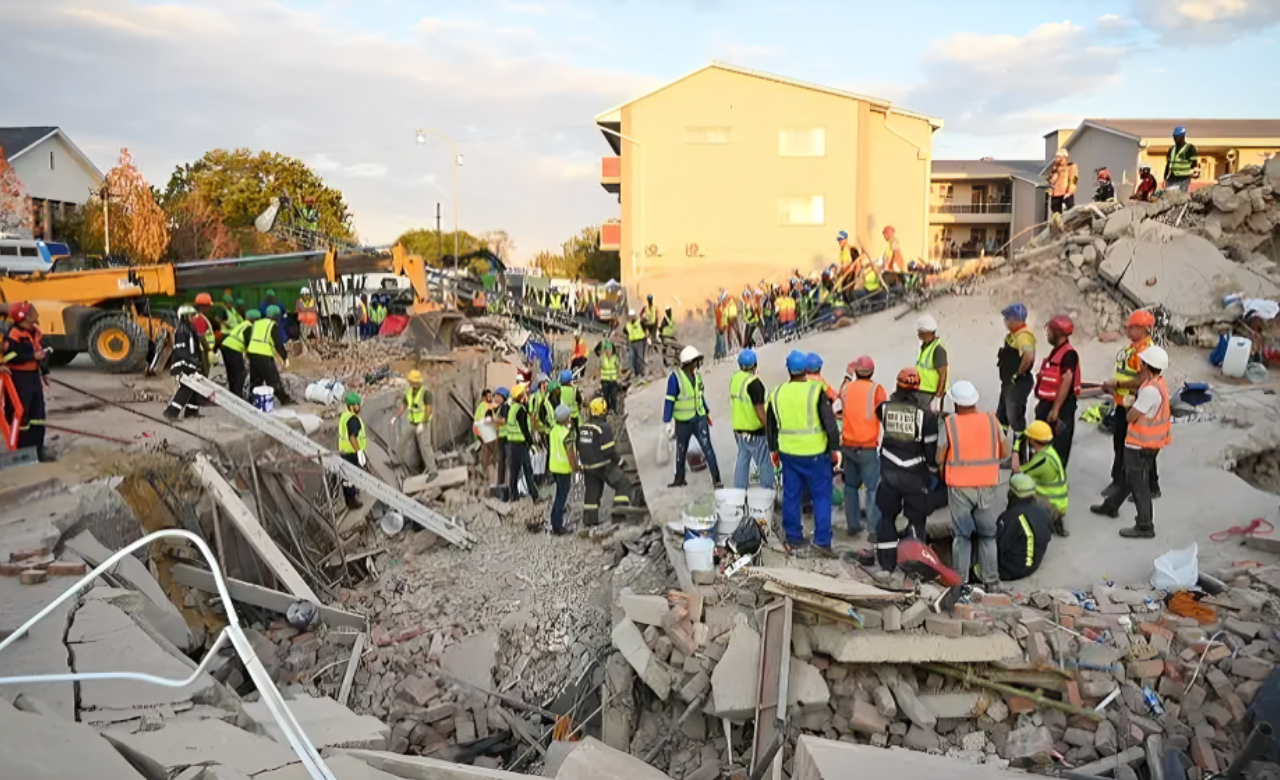
Nearly two years have passed since one of South Africa’s deadliest construction disasters. On May 6, 2024, an apartment building collapsed in George, Western Cape. Thirty-four people died. Many others were seriously injured. Most of the victims were construction workers. Now, in February 2026, political pressure is mounting. Families want justice. They want answers. And they want someone to be held accountable. But getting those answers has not been easy or simple.
The GOOD Party is leading the charge for transparency. Councillor Chantelle Kyd represents George and is speaking out loudly. She says it is completely unacceptable that a full year has passed since the forensic investigation report was completed, yet there has been no justice for the victims and their families. Kyd said the silence is deeply troubling. A forensic report that just sits on someone’s desk does not serve the public interest. Lives were lost because systems meant to protect the public failed. The GOOD Party has made it clear that they will not allow this matter to fade from public memory.
Parliament has also expressed frustration. Committee members are dissatisfied that no one has been held accountable more than a year after the tragedy. The South African Police Service told parliamentary committees that its investigation is at an advanced stage. They said it should be finalized by the end of November 2025, but only if they received an outstanding report from the Department of Employment and Labour. That report was supposed to come quickly. Deputy Minister of Employment and Labour Jomo Sibiya assured Parliament that the report is complete and will be submitted to the National Prosecuting Authority soon. But promises are one thing. Action is another.
The investigation has revealed deep problems in South Africa’s construction industry. There is a shortage of labour inspectors across the country. The Department of Employment and Labour confirmed that only 2,000 inspectors are currently deployed nationwide. That is not enough. The department says it would like to double that number if funds permit. This would strengthen monitoring and compliance with labour laws. Parliament has also expressed alarm at the high number of undocumented foreign nationals employed in the construction industry. This is a simple fact that makes oversight even harder.
Minister Dean Macpherson of Public Works and Infrastructure has taken a controversial stance. He has refused to release the full findings of the forensic investigation to the public. His reason is simple. He wants to protect the criminal case. He believes that releasing the reports too early could jeopardize prosecutions. The guilty parties could use the information to prepare their defense and possibly escape justice. Macpherson says he is acting with the blessing of the victims’ families. They handed a memorandum to Parliament that specifically asked investigators not to release their findings prematurely.
Not everyone agrees with this approach. Some interest groups want full transparency now. They want the public to know what went wrong. But Macpherson insists that justice must come first. He told Parliament that he could release the reports for political expediency and get a few headlines, but that would come at a cost. It would hurt the families’ chances of seeing the guilty parties held accountable. He says his decision is backed by advice from the South African Police Service and the National Prosecuting Authority.
The families themselves are struggling. According to a leading labour specialist, all workers who suffered injury or died on duty qualify for workmen’s compensation, whether they were legal or undocumented. But so far, only two victims have been partially assisted by the Department of Labour. The families are navigating mountains of red tape. It is not easy. They are calling on Parliament to instruct the Department of Labour to urgently fast-track compensation for each of the victims.
The National Home Builders Registration Council has publicly admitted to its dereliction of duty. Yet no interim compensation has been provided to the 62 families affected. The Department of Social Development pledged psycho-social support to the traumatised victims and families, but it has not contacted all of them. These are simple failures that have added to the suffering of people who have already lost so much.
Nocks Seabi, Chairperson of the Portfolio Committee on Human Settlements, has made the committee’s position clear. Accountability must be enforced. Justice must be served for the victims of the George building collapse. The committees remain firm on this point. Nearly two years is too long to wait. The families deserve answers. They deserve compensation. And they deserve to see those responsible face the consequences of their actions. Until that happens, the pressure will continue to mount.