
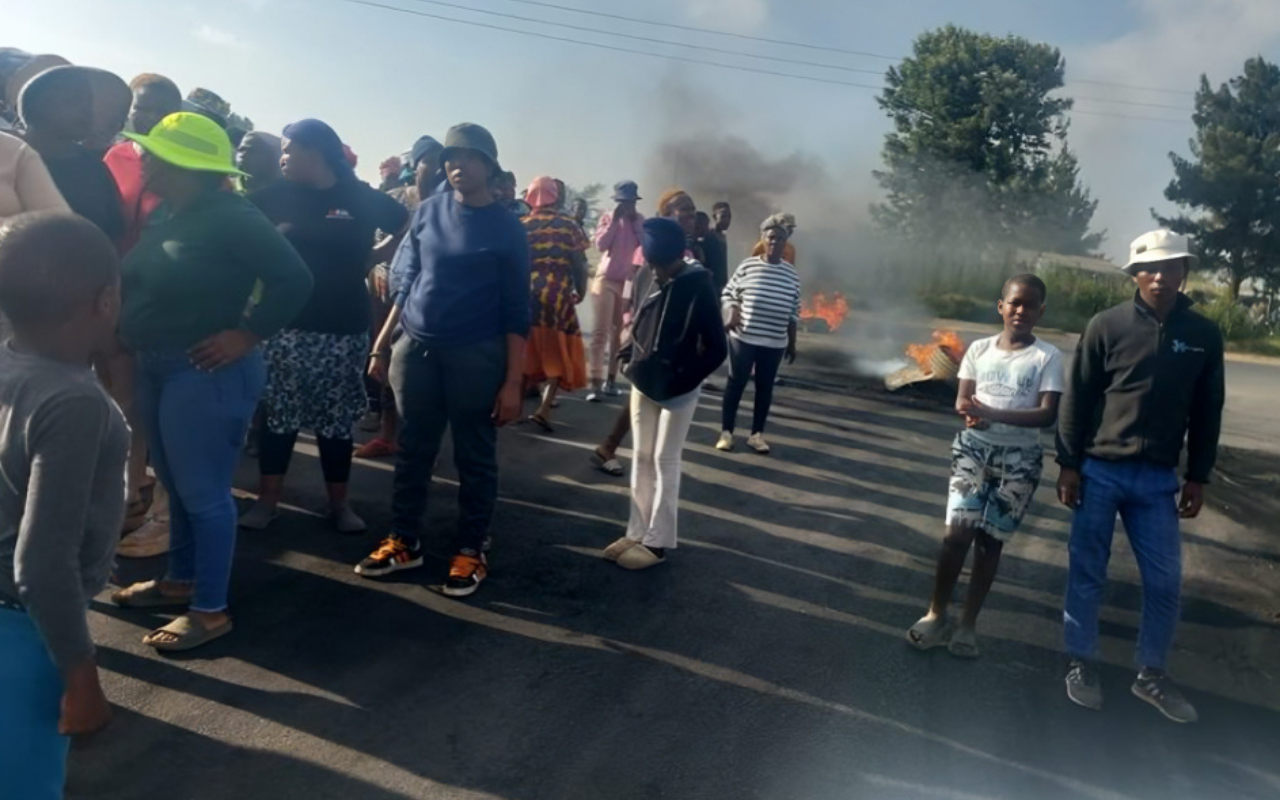
Frustrated residents have taken to the streets to demand action. Their children’s school transport service has completely broken down. Now families are struggling to get learners to school every day.
The protest highlights a serious problem affecting many communities. When scholar transport fails, it doesn’t just inconvenience families. It directly impacts children’s education and their future opportunities.
Parents say the situation has been building for weeks. The transport service that used to pick up their children simply stopped operating. No clear explanation was given. No alternative arrangements were made. Families were left scrambling to find solutions.
For many households, this creates an impossible situation. Not every parent has a car or can afford daily transport costs. Some work far from home and cannot drop children at school. Others have multiple children attending different schools. The logistics become overwhelming very quickly.
Students are missing classes because they have no way to get to school. Some try walking long distances, but this isn’t safe or practical for younger children. Others arrive late after finding alternative transport. Either way, their learning suffers because of problems beyond their control.
The community decided enough was enough. Residents organized a protest to make their voices heard. They want authorities to understand how serious this problem is. Education cannot wait while officials sort out administrative issues.
During the protest, parents carried signs and chanted slogans demanding immediate action. They blocked roads and gathered at key locations to draw attention. Their message was simple but powerful: children need reliable transport to access their right to education.
Local leaders have acknowledged the problem but solutions aren’t easy to implement quickly. Scholar transport involves contracts, budgets, and coordination between different departments. When the system breaks down, fixing it takes time. But parents argue their children don’t have time to waste.
The financial impact on families has been severe. Those who can afford it now pay for private taxis or ride-sharing services. This money comes from budgets already stretched thin. Other essential expenses get sacrificed so children can get to school. It’s not sustainable.
Some parents have had to miss work to transport their children. This puts their jobs at risk and reduces household income even further. The collapse of scholar transport creates a ripple effect that harms entire families, not just students.
Teachers and school administrators are also feeling the pressure. They see empty desks and know bright students are missing out. They understand the situation isn’t the children’s fault. But they can only do so much when students can’t physically get to school.
Community members say they’ve tried reaching out through proper channels. They’ve contacted local government offices and education departments. Promises were made but nothing changed. The protest was their last resort to force action.
The issue raises bigger questions about service delivery and accountability. When essential services like scholar transport fail, who takes responsibility? How quickly should problems be fixed? What happens to the children caught in the middle?
Neighboring communities are watching this situation closely. They worry similar breakdowns could happen in their areas. The protest has sparked conversations about making scholar transport more reliable and sustainable across the region.
Officials have promised to investigate what went wrong. They say they’re working on emergency solutions to get children back to school safely. But residents want more than promises. They want concrete action and a timeline for when normal service will resume.
The protesters made it clear they won’t back down until the problem is solved. This isn’t just about convenience. It’s about protecting children’s futures and ensuring every learner can access quality education regardless of their family’s financial situation.
For now, families continue cobbling together temporary solutions. Neighbors help each other with lifts when possible. Some children wake up extra early to walk in groups. But everyone agrees this cannot be the permanent answer.
The collapse of scholar transport services shows how one failing system can disrupt entire communities. Getting children to school should be easy and simple, not a daily battle that requires protests and public pressure.