

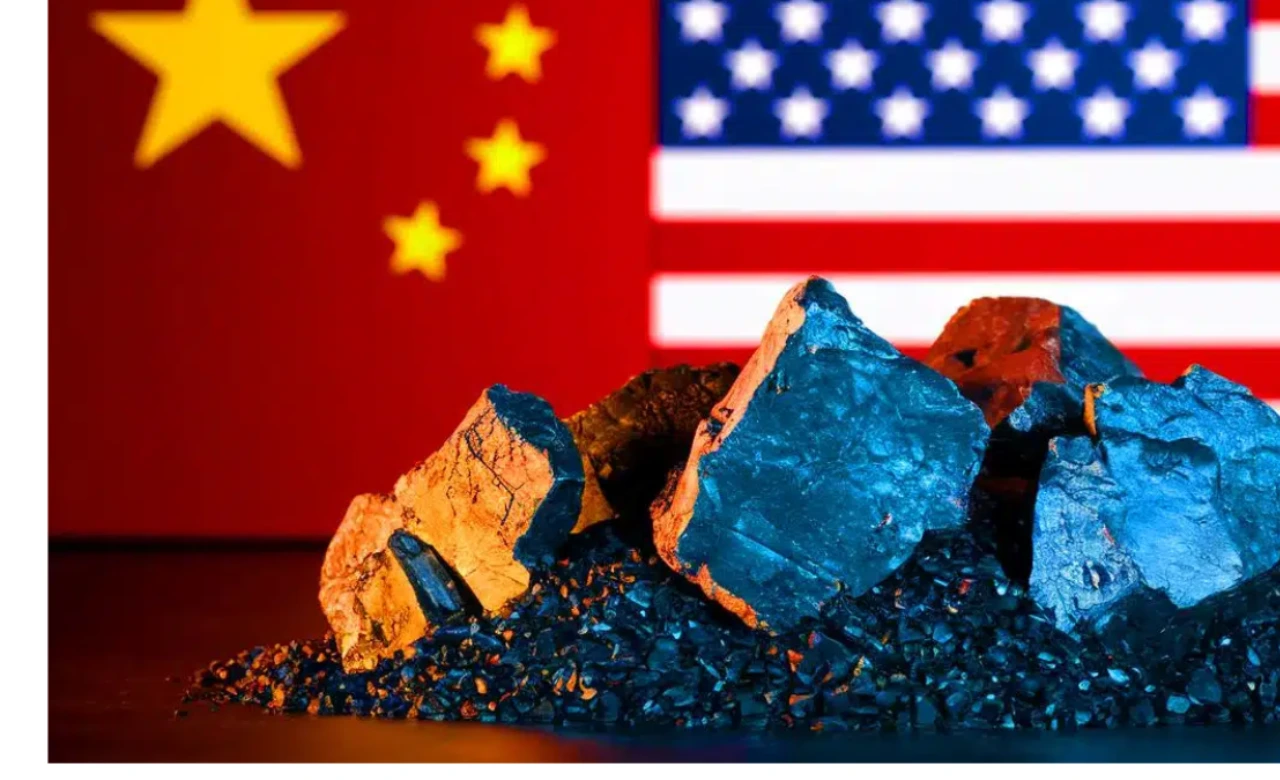
The United States cannot compete with China in mining and processing critical minerals. So instead, America plans to use innovation and recycling to break free from Chinese control.
A new report shows that China dominates the global supply of critical minerals. These are special materials needed for everything from smartphones to electric cars to weapons. China controls almost every step of making these materials. This gives China enormous power over the world economy.
The problem is easy to understand. China spent decades building this control. It invested heavily in mines, factories, and technology. Now China can restrict exports whenever it wants. In 2025, China did exactly that. It blocked exports of rare earth elements and other materials. This action nearly stopped huge parts of the global economy.
The United States tried to catch up through traditional mining. But this approach takes many years, often decades. Building new mines is slow and expensive. The report says America needs a different strategy. Instead of trying to out-mine China, the US should focus on innovation.
What does innovation mean here? It means developing new technologies in simple ways. First, scientists are creating substitute materials. These new materials can replace the ones China controls. For example, researchers are making magnets without rare earth elements. These magnets work just as well but use common materials like iron. Second, companies are extracting minerals from waste. Old mining waste, coal ash, and even oil drilling water contain valuable minerals. New technologies can pull these minerals out. Third, recycling old electronics creates a circular supply chain. Your old phone contains precious materials that can be reused.
The report highlights several promising technologies. One company uses engineered proteins that act like tiny robots. These proteins can separate specific minerals from complex waste. Another company developed a chemical process to extract minerals from old mining waste without using harsh acids. A third company pulls lithium from the water produced by oil and gas drilling. One billion gallons of this wastewater is produced every year in America.
Some major mining companies are already moving forward. Rio Tinto successfully used microorganisms to recover copper from waste rock in Arizona. This technology can reopen old mines that were thought to be finished. MP Materials announced a $500 million investment to build a recycling system for rare earth magnets. They even signed a deal with Apple to supply recycled materials for consumer electronics.
The US government is supporting this effort. The Department of Energy provided $500 million for battery recycling. Another $134 million went to rare earth element recovery projects. The Department of Interior ordered agencies to make it easier to recover minerals from mine waste. These programs show that the government recognizes waste-based recovery as a strategic asset.
However, many challenges remain. New technologies often struggle to move from laboratory to commercial production. This gap is called the “valley of death.” Small companies need funding to build pilot plants and test their technologies. They need customers willing to try new products. The report recommends creating a national innovation venture fund. This fund would provide patient capital to help promising technologies reach commercial scale.
Working with allies is also essential. The G7 countries created a Critical Minerals Action Plan. Canada, Australia, and Japan are all developing similar strategies. Japan has been particularly successful. After China restricted rare earth exports in 2010, Japan invested heavily in recycling and alternative materials. Now Japan leads the world in battery recycling technology.
The report makes several clear recommendations. First, make innovation the centerpiece of US critical minerals strategy. Second, use materials engineering to bypass Chinese choke points. Third, scale up waste-based recovery as a major supply source. Fourth, close the financing gap for new mineral technologies. Fifth, work closely with allies to co-develop and deploy emerging technologies.
The United States has faced similar challenges before. During World War II, Japan cut off 90 percent of natural rubber supplies. The US responded by rapidly developing synthetic rubber. This innovation was as important to victory as the atomic bomb. The government and private companies worked together to solve the problem.
Today’s critical minerals crisis requires the same approach. The US cannot simply build more mines and hope to compete. That strategy would take too long and cost too much. Instead, America must use its strengths in science and technology. New materials, waste recovery, and recycling offer a faster path to independence.
The stakes are high. Critical minerals are essential for modern life. They go into electric vehicle batteries, solar panels, semiconductors, and advanced weapons. Without secure supplies, American industry faces serious risks. China has already demonstrated its willingness to use export controls as a weapon.
The report offers a roadmap for action. It combines technological innovation with smart policy and international cooperation. The goal is simple: reduce American dependence on Chinese critical minerals. The method is innovative: leapfrog China’s dominance through breakthrough technologies.
Success will require sustained effort. Congress must fund research and development programs. Federal agencies must coordinate their efforts. Private companies must invest in new technologies. Allies must work together to share research and build alternative supply chains.
The transition will not happen overnight. Building new industries takes time. But the technologies exist today. Scientists have already proven many of these innovations work. Companies are beginning to scale up production. With the right support, America can achieve mineral independence within a decade.
The choice is clear. The United States can continue depending on China for critical minerals. Or it can invest in innovation to create its own supply chains. The report strongly recommends the second path. Innovation offers a cheaper, cleaner, and faster solution than traditional mining alone.
China’s control over critical minerals represents a serious threat to American security. But it also presents an opportunity. By investing in innovation, the US can build next-generation supply chains. These new systems will be more sustainable, more secure, and more competitive than China’s current model.
The time to act is now. China continues to strengthen its position every day. The longer America waits, the harder it becomes to catch up. But with the right strategy, the United States can leapfrog Chinese dominance. Innovation is the key to breaking free.