
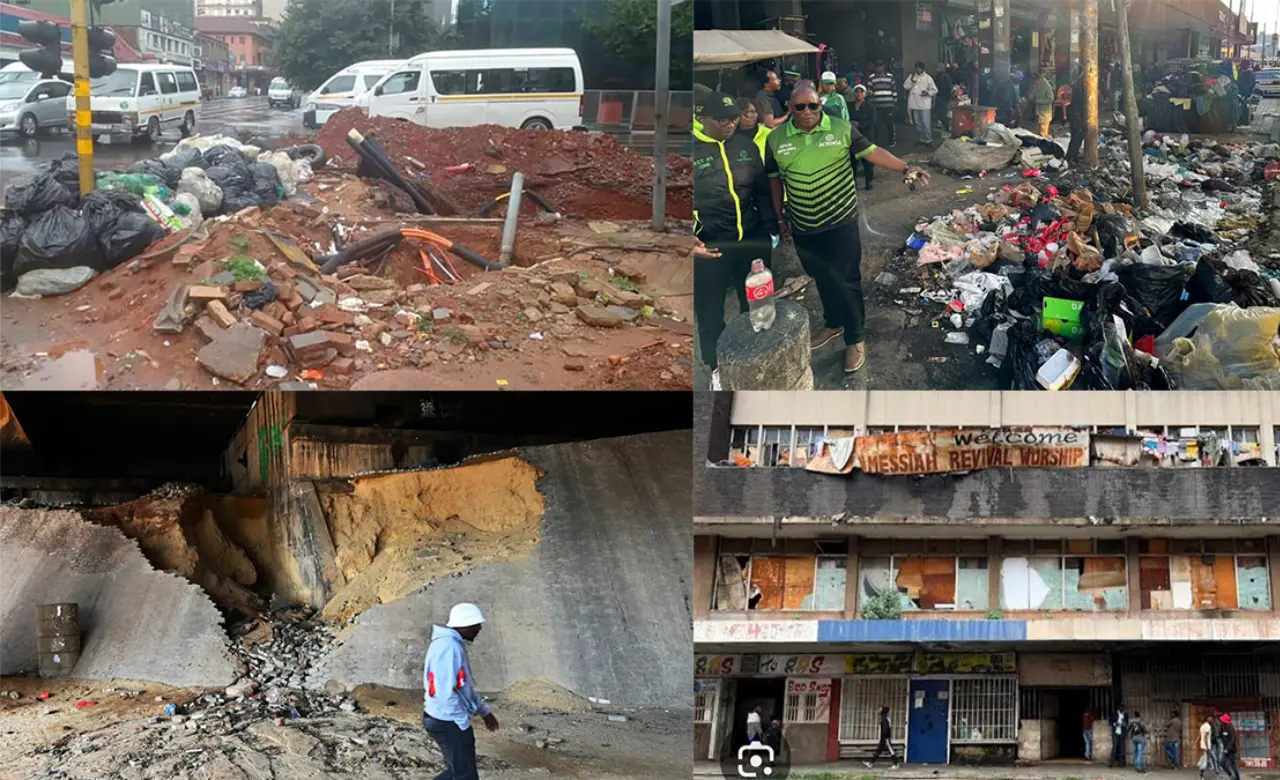
Johannesburg, the wealthiest city in South Africa, continues to struggle with major problems. The city is facing a serious crisis that affects millions of people living there. At the same time, the government has released new rules about cannabis that could make things more simple for adults across the country.
The infrastructure problems in Johannesburg are getting worse every day. Roads are full of potholes. Water pipes are breaking. Traffic lights are not working. The city needs around 200 billion rand to fix everything. This is a huge amount of money that the local government does not have right now.
Water is one of the biggest problems facing residents. Nearly 40% of the city’s water is lost through leaking pipes before it reaches homes. Many neighborhoods have experienced water shortages lasting for days or even weeks. The city’s water infrastructure is old and poorly maintained. Officials say that 60% of the water network has already exceeded its designed lifespan.
The electricity situation is also difficult. City Power, which supplies electricity to Johannesburg, cannot provide reliable service. Much of the electricity grid is over 50 years old. This means frequent power cuts for residents and businesses. The problems continue even though national load-shedding has stopped. Many transformers and substations are breaking down because they are too old.
Bridge safety is another major concern. Less than 6% of the city’s 902 bridges are in good condition. Officials say 702 bridges are in poor or very poor condition. Twenty bridges are on the brink of closure. The cost to repair all these bridges is estimated at 16 billion rand. The last comprehensive assessment was done eight years ago due to budget cuts.
Traffic lights across the city are also failing. The Johannesburg Roads Agency needs 70 million rand to fix damaged and stolen traffic lights. Around 396 traffic lights have been vandalized. Only 15 of the 1,400 backup power units remain intact. The rest have been stolen or damaged. This makes it easy for criminals to operate and creates dangerous intersections for drivers.
The city’s financial situation makes solving these problems very difficult. Mayor Dada Morero admitted that the city is living hand-to-mouth. While Johannesburg can still pay its debts and meet current obligations, there is no money left for fixing old infrastructure. The city is exploring ways to raise funds from private investors. It hopes to raise an additional 100 billion rand over the next five years.
Poor governance has made the situation worse. Since 2016, Johannesburg has had eight different mayors. This instability has prevented any long-term planning or consistent policy implementation. Corruption and mismanagement have wasted money that should have gone to maintenance and repairs.
Many wealthy residents are leaving Johannesburg. The millionaire population has dropped by 44% over the past decade. Most are moving to Cape Town and other areas in the Western Cape. Cape Town is expected to overtake Johannesburg as Africa’s richest city by 2030.
While Johannesburg struggles, the government has announced new cannabis regulations that bring good news for adults. The Ministry of Justice and Constitutional Development published draft rules that set clear limits on cannabis possession and cultivation for private use. These rules make it simple to understand what is legal and what is not.
Under the proposed regulations, adults can possess up to 750 grams of cannabis. This is enough for approximately 2,000 standard joints. The rules apply to both public and private spaces. Adults can cultivate up to five cannabis plants at any time, regardless of the plant’s size or strain.
The new rules also cover transportation. Adults can transport cannabis as long as it does not exceed 750 grams. The cannabis must be concealed from public view during transport. It should be placed in the boot, trunk, or enclosed storage compartment of the vehicle. Drivers must inform passengers that the vehicle is carrying cannabis.
Cannabis use by children remains strictly prohibited. The government cited medical concerns about the impact on developing brains. Adults who supply cannabis to children or allow them to use it will face criminal charges.
The cannabis regulations stem from a 2018 Constitutional Court ruling. The court declared that criminalizing adult use of cannabis for private purposes was unconstitutional. It violated the rights to dignity, equality, and freedom. Parliament then passed the Cannabis for Private Purposes Act in May 2024.
The public can comment on these draft cannabis regulations until March 5, 2026. After considering all submissions, the final regulations will be sent to Parliament for approval. This public participation process ensures the rules are balanced and practical.
It is important to note that these regulations do not cover commercial cannabis sales. Buying and selling cannabis remains illegal except for licensed medical operators. The rules only apply to private use by adults. Commercial matters are being handled by other government departments.
Legal experts say the new limits are reasonable. Attorney Paul-Michael Keichel, who has worked on cannabis legalization since 2009, believes the regulations are a positive step. However, some questions remain about how the rules apply to shared private spaces. These concerns will hopefully be addressed during the public comment period.
The contrast between Johannesburg’s infrastructure crisis and the cannabis regulations shows two different sides of South Africa’s governance. While the cannabis rules demonstrate the government’s ability to create clear, easy-to-understand policies, the collapse in Johannesburg shows the consequences of poor management and lack of maintenance.
Johannesburg contributes 16.5% of South Africa’s GDP and employs 12% of the national workforce. The city hosts the Johannesburg Stock Exchange, Africa’s largest. Many of the country’s biggest companies have their headquarters there. This makes the city’s problems a national concern, not just a local issue.